

The Complete Guide to Canvas Stretching (and Why It Matters)
Canvas stretching is a process used to mount printed images or paintings onto a wooden stretcher bar frame to create neat, professional looking wall art. Canvas stretching ensures there is no sagging, wrinkling or distortion in your images. Professionally stretched canvases are great if you have large prints, valuable art or simply want to have a neat looking finished product.
You have a great photo, all colors are vibrant on the computer and the photo is printed. However, when it's placed on your wall, there's something amiss. It is saggy, edges are uneven or corners are puckered. Typically, the print is not the problem. It is the way that the canvas was stretched.
While a canvas print is one of the more discussed items in the print industry, the process of canvas stretching is rarely discussed, but it is actually the thing that determines the look of your artwork after a few months or years from its initial creation, whereas a polished, gallery-ready print is what it looks like. This guide will tell you what canvas stretching is, how it works, the difference between good stretching and bad, and how to properly take care of your canvas after it has been stretched on the wall.
What Is Canvas Stretching?
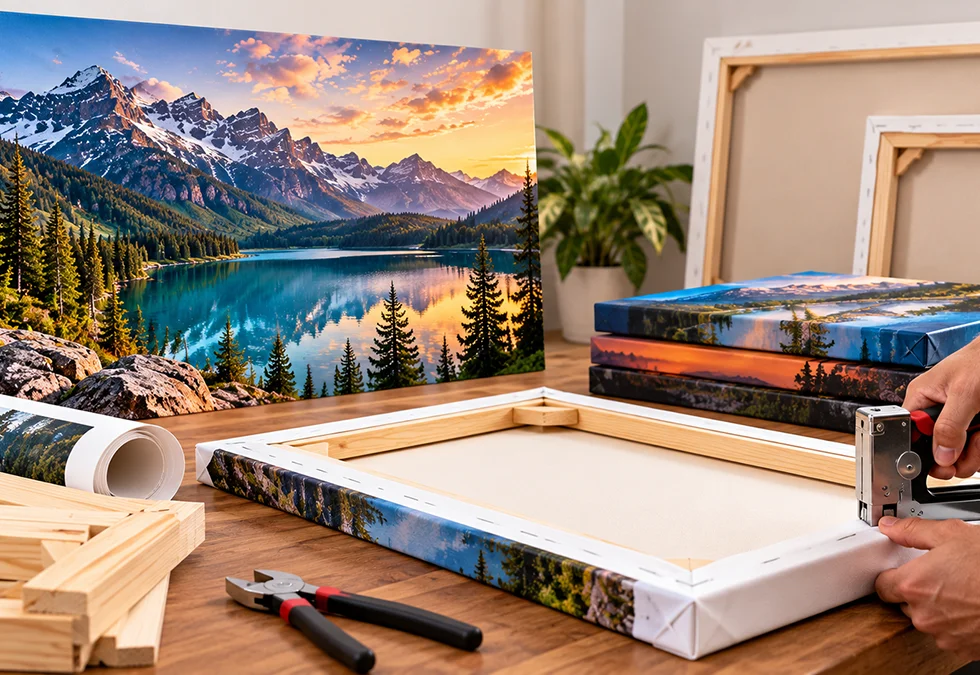
The process of tightly stretching a printed or painted canvas over a wooden frame (stretcher bar frame) and securing it in a flat, smooth and evenly stretched surface. The canvas is then secured behind, typically by stapling, making for a frame less picture to hang on the wall.
Put it as you make a bed with the hospital corners. The cloth should be pulled tight in all directions and corners should be folded in a beautiful manner. Without care, you will be able to observe it with ease.
Why Canvas Stretching Matters
It may seem like a touch of a finishing touch, but the effects of stretching are felt in nearly every aspect of the appearance and performance of the finished piece.
It determines how your image looks. When your canvas is made taut, the surface is drum tight and the image appears clearly. Ripples and warping in a photograph will result from uneven or loose tension, leading to lines, faces and horizons being distorted.
It protects the print over time. Humidity and temperature will affect Canvas naturally. A canvas that is well-stretched will stay flat throughout changes of season, a poorly stretched canvas may sag or wrinkle.
It affects durability. A uniform distribution of stress occurs for even tension. The uneven pulling of forces applies forces at certain points, causing tearing or extending out of shape.
It gives the piece a professional finish. The key to creating a canvas that resembles authentic wall art is having clean and tidy corners and sides.
What Goes Into Canvas Stretching
1. The Stretcher Bars
The bottom frame is the structure. Stretcher bars are produced of straight kiln dried wood to prevent warping. No matter how well stretched your canvas is, warped bars will pull it out of shape. Bar depth is a factor:
- Standard (gallery depth) bars are narrow and are for a classic, simple look.
- The deeper bars will add more depth and dimension to a piece and work better for larger pieces.
Larger canvases require cross braces, too, to help keep the frame from bowing in the middle, thereby keeping the frame square.
2. The Canvas Material
Canvas is not uniform, it stretches in different directions. Blended cotton and polyester fabrics have different gathers and springs. Different weave and weight will impact the ability to pull tight and maintain the pull of the fabric.
3. The Pulling and Fastening
It is here that skills come into play. The canvas must be pulled tight and straight, preferably starting from the center of each side, and pulling alternately to maintain balance. The staples go along the back or sides of the frame and corners are neatly folded down to lay flat.
4. The Finishing Touches
The back should be neat and edges clean after stretching. The image may be wrapped around the sides (a gallery wrap) or the side may remain in one color or may be mirrored to create a seamless look.
Common Canvas Stretching Problems
When you're looking for a poorly stretched canvas, you can do this as a buyer or when you're viewing a print you've already purchased.
- Sagging or loose surface. The canvas is not tight enough or has stretched over the years.
- Ripples or waves. Tensions were uneven, sometimes due to tension on one side.
- Crooked or warped frame. Bent wood – due to inferior quality or lack of treatment.
- Messy corners. Folds that fill in the side and are not even or flat.
- Image misalignment. The painting is slightly off-center due to the movement of the canvas during stretching.
The majority of these are related to the quality of the materials and the attention paid to stretching it; there should not be any rush in the process.
DIY vs. Professional Canvas Stretching
You can stretch your own canvas, and there are many artists that do. However, the right tools (canvas pliers, a staple gun, level surface), and practice, are necessary to achieve proper tension. Typical errors are improper pulling, loose stapling, and tearing a printout during handling.
The best time to stretch professionally is when:
- You have a print photo or completed artwork that you don't want to harm.You have a print photo or completed artwork that you are not willing to destroy.
- The piece is large, so maintaining the tension is more difficult.
- You prefer a clean, uniform look that's ready to be shown in a gallery.
- You’re framing or mounting several pieces and want them all to match
When you are in the need to stretch a print or painting, a professional service will do the job for you without a lot of guessing. You can learn more about canvas stretching and how it can bring your artwork to life.
How to Care for a Stretched Canvas
In this course, you will learn how to care for a stretched canvas.
- Keep it out of direct sunlight. This can cause fading and dry out from extended sun exposure.
- Avoid extreme humidity. Damp basements and bathrooms are not desirable. Sagging or mildew can be caused by moisture.
- Hang it away from heat sources. Dry canvas can cause the canvas to tighten and crack because of radiators and vents.
- Dust it gently. Just a soft, dry cloth, or a light feather duster will do. Do not use water, or cleaning sprays.
- Handle by the frame. Grasp the entire frame of the worksheet. Avoid pushing against the front of the canvas; also don't place sharp objects against the canvas.
Is Canvas Stretching Right for Your Artwork?
When you have a photo, painting, or print you want to transform to hangable, one of the finest ways to do so is by stretching. It adds depth and presence to your artwork, and it can be framed, if you wish. This is perfect for family portraits, travel photos, original paintings, and commemorative photos, too!
In Summary
Stretching canvas may not be the most eye-catching aspect of creating wall art, but it is the most crucial. It's the right frame, the right fabric, and careful, even tension, that make a flat print look great over the years.
Knowing the process will help you to ask the right questions and appreciate quality when you're stretching a canvas by yourself or when the job is outsourced to the professionals. A good stretch won't be felt if performed correctly. The art will be evident.
Frequently Asked Questions
What is canvas stretching?
Canvas Stretching: the art of tightly stretching a canvas over a wooden stretcher bar frame and permanently holding it in place, typically with staples on the back of the stretcher. The outcome is a flat, even tensioned, unframed piece that can hang.
Why does canvas stretching matter?
The stretch will affect the appearance and durability of your art. Tension keeps the surface smooth and the image undistorted, but poor tension causes the surface to sag, ripple and makes the lines in your photo a bit wavy.
What are stretcher bars?
The wooden frame that holds the structure of the canvas is called a stretcher bar. Good bars are produced using straight kiln-dried wood which will not warp. Cross braces are also used on larger canvases to maintain a square frame and to prevent the frame from bowing in the middle.
What is the difference between standard and deep stretcher bars?
Standard (gallery depth) bars are narrower and offer a classic and simple look. Deeper bars are more dimensional and alive and work best with larger pieces.
What is a gallery wrap?
A gallery wrap is used to wrap the image around the side of the stretcher bars without the need for a frame. The sides can also be a solid colour or have a mirrored edge to create a seamless look.
How can I tell if a canvas was poorly stretched?
Symptoms are types of folds that are not aligned, image displaced slightly off-center, ripples or waves on the surface, the surface is loose or sagging, the frame is straight or warped, and the image folds in corners are not neat. The majority of these boils down to hastily done work or poor quality materials.
Why is my canvas sagging?
Sagging typically occurs when the canvas is not pulled tight enough when being stretched, or it has lost tension over time. The humidity and temperature changes in most canvas can also impact canvas, and it’s best to avoid placing a properly stretched piece in a damp room or near a heat source.
Can I stretch a canvas myself?
Yes, lots of artists do. Canvas pliers, a flat work surface, a staple gun and practice are required. Common errors are pulling unevenly, loose stapling, and handling the print which can cause damage.
When should I choose professional canvas stretching?
When you have a print or finished piece you don't want to harm, if the piece is large, you require a clean, "gallery-ready" finish, or you are stretching a number of pieces and want to ensure they all look alike, then professional stretching is the best option.
Does a canvas need to be framed after it’s stretched?
No. A stretched canvas is a canvas that is intended to be hung without a frame. If the look is appealing you may choose to add a frame for a completed or traditional presentation.
How do I care for a stretched canvas?
Avoid direct sunlight and heat sources, and avoid excess humidity. Use a soft dry cloth or light feather duster to dust gently and do not use water or cleaning sprays. Handle by the frame not by the front of the canvas.
What types of artwork can be stretched?
Family pictures, travel photographs, original paintings and commemorative photographs work well as long as the picture is clear and the file is of high resolution.
Where can I get my canvas stretched?
Have your photo or artwork professionally stretched at a print shop such as Cloudburst Designs - canvas will be stretched evenly, held in place neatly, and ready to hang.