

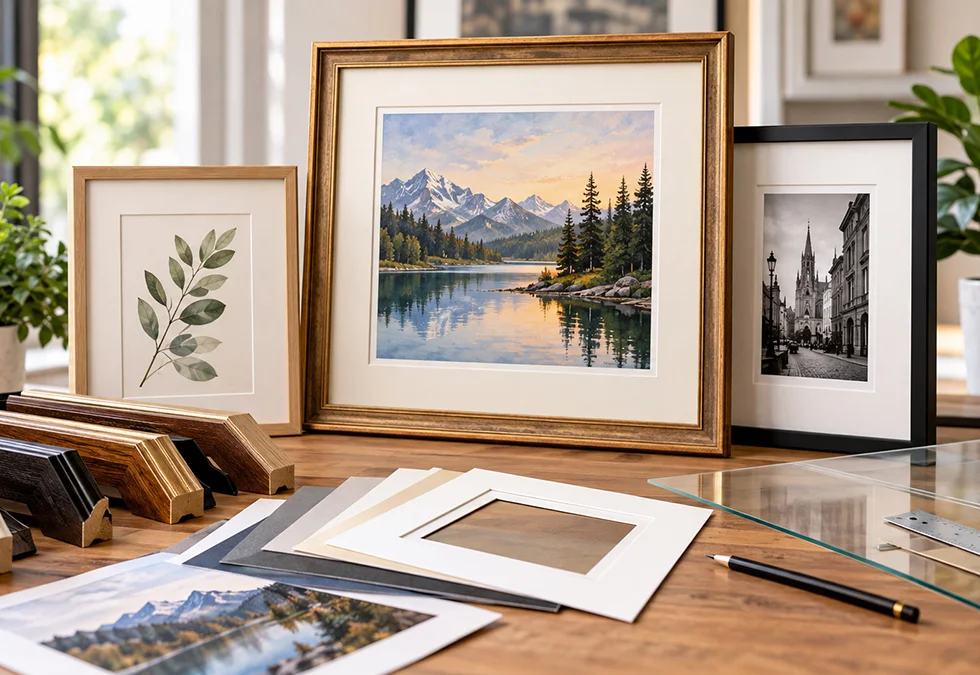
Custom Framing 101: A Beginner’s Guide to Framing Your Art
You have a print you love, a painting you have completed, or you've been given a photo that you want to hang up. Now comes the question that prevents many people from going forward: how do you frame it? It may seem daunting at the beginning, as you're not used to the terms and concepts of custom framing such as matting, glazing, and rabbets. Once you know the fundamentals, it is one of the most satisfying methods to keep your art safe and in its best condition.
This tutorial will educate you about the custom framing, the value of it, and help you select wisely on all aspects of your frame.
What Is Custom Framing?
Custom framing is a process where a frame is individually designed and constructed to fit your piece in lieu of a generic size. From the frame moulding to the mat color to the type of glass everything is chosen to compliment your art, your space and your style.
If your artwork is a standard size, then ready-made frames are good. However, many items don't: panoramic photographs, old prints, children's drawings, certificates and original paintings are frequently unusual sizes. Custom framing avoids this problem by allowing you to frame perfectly.
Why Choose Custom Framing?
It fits any size or shape. Nothing need be cut off your artwork, or second best fit in a frame.
It protects your artwork. Long term protection for art is provided by the right materials that shield art from dust, moisture, handling, and fading.
It makes your art look better. The right frame and mat will keep the viewer engaged with the work, and allow for breathing room.
It suits your space. You can match frames with your furniture, wall colours and personal style.
It’s a lasting investment. A good frame will make the painting or drawing have a long life.
The Parts of a Custom Frame
It is easier to communicate about what you're looking for when you know the essential parts.
The Frame (Moulding)
The outer perimeter is known as the frame. The frame is available in a range of materials from wood to metal and composite, and a range of finishes from natural grain to black, white, gold and bright colours. Wide frames are solid and classic, slim frames are contemporary and airy.
The Mat
The mat is a strip of paper that creates the border between the artwork and the frame. It offers additional space, prevents picture from touching glass and may intensify colors of the painting. Mats are available one or two-sided and are available in a range of colors that complement or contrast your artwork.
The Glazing (Glass or Acrylic)
Glazing is applied to the front of your artwork. Common options include:
- Standard glass: Clear and cheap.
- Non-glare glass: Minimizes reflections in bright light
- UV-protective glazing: Helps protect against fading caused by light exposure
- Acrylic: Lighter and tougher than glass, good option for larger pieces or busy families
The Backing and Mounting
The backing of your frame is as important as the front. Reputable framers use acid-free backing and mounting techniques to ensure your art is nicely framed, lies flat and remains protected from damage.
How to Choose a Frame Style
Having design training is not a requirement for picking well. The following are a few tips that are helpful:
- For a mat or frame, start with the art and then pick a colour from the art to use for your mat or frame so it has a sense of cohesion.
- Think about the room. Think about the wall and furniture colors, and the mood you'd like to have.
- Pair the weight of the frame to the piece. Delicate art will look lovely on slim frames, while bolder pieces will benefit from the heft of heftier moulding.
- Lay on a generous amount of mat. A big mat can add a sense of grandeur and gallery to a piece.
- Keep it cohesive. If you have multiple frames on the same wall, keep it to one style or set of colors.
What Can You Frame?
Just about anything can be custom framed if it has any meaning:
- Photographs and prints
- Paintings and drawings
- Memorabilia from the concerts and posters.
- Diplomas, certificates and awards.
- Children’s artwork
- Maps, documents and keepsakes
Common Beginner Mistakes to Avoid
Choosing a frame before measuring or consulting. There are no standard sizes or solutions for odd sizes.
Skipping protective glazing. Art can fade over time due to exposure to sunlight.
Using non-archival materials. Arts and crafts can be discolored or damaged by inexpensive backing and adhesives.
Overpowering the art. You should hold the piece in the frame, but not let the frame overwhelm the piece.
Hanging in the wrong spot. Framed work can be damaged by direct sunlight and moist places.
Tips for Caring for Framed Art
- Avoid hanging in places subject to direct sunlight or high humidity, such as bathrooms.
- Dust the frame only with a very soft dry cloth.
- Clean the glass with a damp glass cleaning solution (do not apply directly on the glass).
- Check hardware occasionally for proper function.
In Summary
Custom framing is much more than just framing an image. It's about safeguarding what's important to you and showing it off to its best. Once you know a bit about frames, mats, and glazing, you'll be able to choose wisely and have a piece you'll treasure for years.
Ready to Frame Your Art?
Looking for just the right frame for a piece? Stop by Cloudburst Designs in Coquitlam and discuss what you need and receive a custom frame for your artwork.
Frequently Asked Questions
What is custom framing?
Custom framing involves designing and creating a frame for your art piece. You don't purchase a standard size frame from a store, rather you choose the moulding, mat, glazing and mounting to match your piece, your space and your style.
Is custom framing worth it?
Yes for the majority of people. Custom framing provides protection from handling, dust and light, enhances the artwork's presentation and is available in any size. It is especially important for treasured photos, keepsakes, and original artwork you want to preserve.
How much does custom framing cost?
The price is dependent on the size of the piece, the materials used, including frame style, mat and type of glazing. The higher quality and the larger sizes are more expensive. The best method for obtaining an accurate price is to bring in your artwork where you will get a quote.
What is a mat, and do I need one?
The line around the art piece and the frame is called a mat. It adds space, prevents the art from touching the glass, and can enhance the colors of the artwork. Many pieces of art don't need one, but most framed art pieces are more beautiful without them.
What is the difference between glass and acrylic glazing?
Clear and scratch resistant, glass is cheap. Light weight and shatterproof, acrylic is a good choice for heavy things or places where toddlers are likely to explore. Both have options like non-glare and UV protection.
Does framing protect art from fading?
Light can cause fading, so UV-protective glazing can help prevent this. If you hang your art pieces away from direct sunlight it makes a significant difference too.
What can I have custom framed?
Photographs, prints, paintings, posters, diplomas, certificates, children's artwork, maps, keepsakes – anything flat!
How do I choose the right frame style?
Begin with the art. When it comes to the mat or the frame, choose a colour from the piece, match to wall colour and furniture and match up the frame's weight with the piece. Delicate art suits are suited to slimmer frames, whereas larger moulding is suitable for bolder designs.
How long does custom framing take?
Depending on the nature of the project and materials, it may take varying lengths of time to complete.
How should I care for framed art?
Keep away from direct sunlight and moisture, dust the frame using a soft dry cloth, and clean the glass by spraying cleaner on the dust cloth rather than the frame.